What Makes It Special
Maui's Signature Underwater Experience
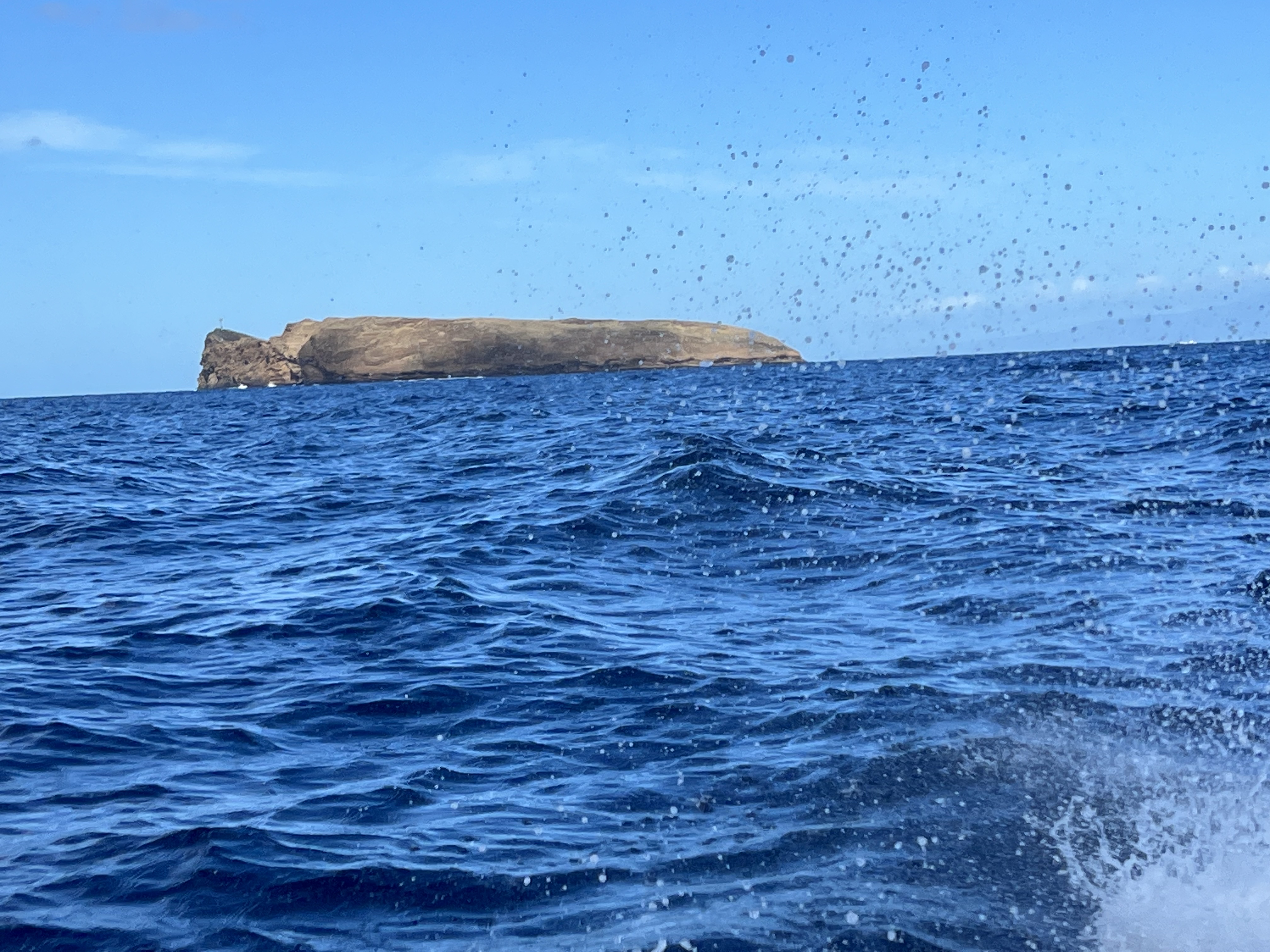
Molokini Crater is exactly what it sounds like — the eroded rim of an ancient volcanic crater that sank into the sea, leaving a crescent-shaped island about 3 miles off the coast of Mākena. The crater's shape creates a natural shelter that protects the water inside from currents and wave action.
The result is visibility that can reach 150 feet on a clear morning — the kind of clarity where you can see the entire reef from the surface and watch fish moving in schools sixty feet below you. It's genuinely unlike anything you'll find from shore.
The crater is a Marine Life Conservation District, which means no fishing, no collecting, and no anchoring on coral. That protection — in place since 1977 — is exactly why the marine life is so abundant. Mālama — take care of it.
At a Glance
Location
~3 miles off Mākena, South Maui
Between Maui and Kaho'olawe
Access
Boat only — no shore access. Boats depart from Mā'alaea Harbor (~25 min drive from P410) and Lahaina.
Visibility
Up to 150 feet on a calm morning — consistently the clearest water on Maui
Marine Life
250+ fish species, green sea turtles, spinner dolphins, white-tip reef sharks, eagle rays, manta rays
Best Time
Early morning departures (7–8am). Trade winds build by midday — rougher water, more boats.
Protection Status
State Marine Life Conservation District — no fishing, no collecting, no coral contact
Andrew's Take
"Go early. Book the first departure, skip breakfast, and get on the water before 8am. The difference between a 7am Molokini trip and a noon trip is night and day — calmer water, fewer boats, clearer visibility, and you have the reef largely to yourself."
Know Before You Go
The Two Sides of Molokini
The crater has a protected inside and a dramatic outside. Most snorkel tours work the inside wall. Most dive tours go to the back wall. They are very different experiences.
The Inside Wall
The interior of the crater is where virtually all snorkel tours operate. The water here is calm, protected, and typically ranges from 10 to 70 feet deep. The inside wall itself drops away at a steep angle, giving you the sensation of hovering above an enormous reef that just keeps going down.
This is where you'll find the dense schools of reef fish — yellow tang, moorish idol, Picasso triggerfish, parrotfish, and the Hawaiian state fish, the humuhumunukunukuāpua'a. Sea turtles are very likely; spinner dolphins sometimes cruise through.
Good for
The Back Wall
The outside of the crater — the "back wall" — drops nearly 300 feet into the deep channel between Maui and Kaho'olawe. This is serious dive territory, exposed to open ocean currents and home to larger, deeper-water species.
White-tip and grey reef sharks patrol the back wall regularly. Eagle rays, manta rays, and occasional hammerheads are sighted here. The sheer scale of the drop-off — looking out into 300 feet of open blue — is an experience even veteran divers describe as humbling.
Good for
Marine Life
What You're Likely to See
Green Sea Turtles
Honu are commonly seen at Molokini. They graze on the algae growing on the crater walls and are entirely accustomed to snorkelers. NOAA recommends keeping at least 10 feet away, and touching or harassing them is illegal under federal and state law — but they often swim right past you regardless.
Reef Fish — 250+ Species
Yellow tang, moorish idol, parrotfish, needlefish, butterflyfish, triggerfish, and the humuhumunukunukuāpua'a. The diversity here is staggering — you'll see fish you've never encountered at shore sites.
Spinner Dolphins
Pods of spinner dolphins often rest in the calm waters near Molokini in the morning before heading offshore to feed. Boats slow and passengers watch from the rail. Federal regulations prohibit swimming toward or with dolphins — enjoy from the boat.
White-Tip Reef Sharks
Common on the back wall, occasionally visible from the inside. White-tip reef sharks are small (3–5 feet), slow, and entirely disinterested in snorkelers. They often rest motionless on the sandy bottom — easy to spot, never a concern.
Eagle Rays
Spotted eagle rays — black with white polka dots, wingspan up to 6 feet — glide along the crater walls and occasionally cross the open water between the wall and the surface. Seeing one fly past below you is one of snorkeling's great moments.
Manta Rays (seasonal)
Manta rays pass through Maui's waters seasonally — most often in summer months. A manta sighting at Molokini is not guaranteed but not rare either. When they appear, nothing else compares — wingspans up to 14 feet, moving in total silence.
Important
Conservation Rules at Molokini
Do not touch the coral. Ever. Even brushing against it with a fin kills polyps that took decades to grow. Stay neutrally buoyant and aware of your fins at all times.
No sunscreen without reef-safe certification. Hawaii law bans oxybenzone and octinoxate — the chemicals that bleach coral. Use mineral-based (zinc oxide) reef-safe sunscreen only.
Give sea turtles space. NOAA recommends staying at least 10 feet away, and touching or harassing them is illegal under federal and state law — no touching, no chasing, no blocking their path. They'll approach you on their own terms.
Take nothing. No shells, no coral fragments, no fish. It's a Marine Life Conservation District — removing anything is illegal and carries significant fines.
How to Get There
Choosing a Tour Operator
Boats to Molokini depart from Mā'alaea Harbor — about a 25-minute drive from P410. That's still one of your biggest advantages as a South Kihei guest; visitors staying in Lahaina or Ka'anapali face an hour-long drive to the harbor before they even board.
Most Popular
Trilogy Excursions
The gold standard of Maui sailing tours. Family-owned for over 50 years. Catamaran departures from Mā'alaea — continental breakfast and deli lunch included. Smaller boats mean more personal experience.
sailtrilogy.com ↗Best for Snorkelers
Pride of Maui
Large catamaran with spacious deck and onboard waterslide. Snorkel-focused tours with excellent gear included. Good for families and groups. Continental breakfast and BBQ lunch aboard.
prideofmaui.com ↗Best for Divers
Maui Dive Shop
Molokini back wall dives and certification courses. Multiple Mā'alaea departures daily. Excellent for certified divers who want a dedicated dive experience rather than a snorkel tour with dive add-ons.
mauidiveshop.com ↗Book In Advance
Popular morning departures fill weeks ahead in peak season (December–April, June–August). Book before you leave home.
Gear Is Included
All reputable tour operators include snorkel mask, fins, and flotation noodle or vest. You don't need to rent gear separately for Molokini.
Motion Sickness
The channel crossing can be rough in winter. Take Dramamine or use Sea-Bands the night before if you're susceptible.
Before You Go
What to Know & What to Bring
What to Bring
Practical Tips
Keep Exploring
More Ocean Adventures
Your Maui Basecamp
Mā'alaea Harbor is a 25-minute drive from P410
Staying in South Kihei is a real logistical advantage for a Molokini trip. Early departure, a short drive to the harbor, back at the beach by noon.
Book P410 on VRBO or HomeyHawaii