Season
Nov – Apr · Peak Jan – Mar
Species
Humpback Whales
Free viewing
Spot from Lanai · Watch at Kam II
Why Maui
The whale-watching capital of the world
The shallow, warm waters of the Au'Au Channel — running between Maui, Lana'i, and Moloka'i — serve as the primary breeding and calving ground for North Pacific humpback whales. Each winter, roughly 10,000 whales make the 3,000-mile journey from Alaska to these protected waters.
This concentration, combined with the channel's sheltered geography and excellent visibility, makes Maui consistently rated as one of the best places in the world to observe humpback whales up close. You will see whales.
The question is how many, and how close. From the beach across from P410 on a good January morning, it's not unusual to count dozens of spouts on the horizon — with occasional breaches close enough to hear the impact.
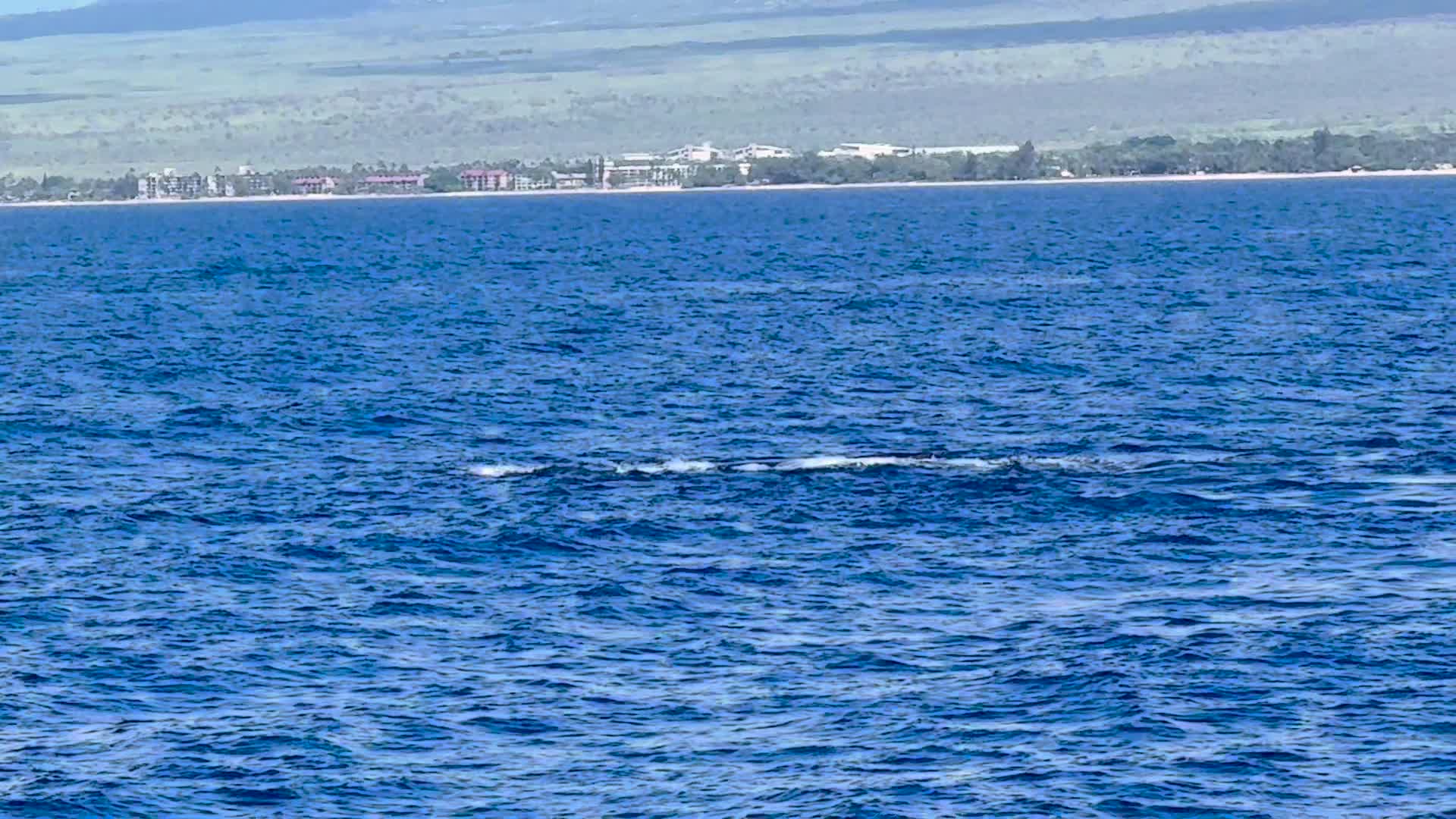
The Au'Au Channel between Maui and Lana'i is the humpback whale's chosen nursery — warm, shallow, and protected from Pacific swells. Viewing from the Kihei coastline puts you right on the edge of this natural sanctuary.
How to Watch
From the lanai to the open ocean
Free · No Planning Required
From P410 & the Beach
During peak season you can spot whales from the Kama'ole II beach or from the P410 lanai — no boat, no cost, no reservation. Bring binoculars for the best view. Morning is best when the water is calm and glassy. Watch for the spout first — a tall white plume — then stay focused on that spot for a breach or fluke.
Best: Jan–Mar · Morning · Binoculars recommended
Best Experience · Book Ahead
Whale-Watching Boat Tour
Getting out on the water puts you in the whales' world. Tours typically last 2–3 hours, depart from Maalaea Harbor or Lahaina, and get within federal viewing distance (100 yards) of the whales. Naturalist guides provide commentary. Hydrophones let you hear whale song underwater. An unforgettable experience.
Andrew & Cindy's go-to: Pacific Whale Foundation — they have a convenient location in North Kihei. Also check Trilogy. Visit official sites for current availability.
Free · Scenic · Educational
McGregor Point Lookout
The rocky cliff at McGregor Point, just north of Maalaea, is the best free land-based whale-watching spot on Maui. The elevated vantage point and clear channel view make it exceptional. Park at the pullout on Honoapiilani Highway and scan the channel — the Pacific Whale Foundation often staffs a volunteer station here with binoculars.
15-minute drive from P410 · Free · No reservation needed
Field Guide
What you'll see
Humpback whales are among the most acrobatic of the great whales. Once you know what to look for, watching becomes an active, thrilling sport. Here's what to watch for:
Spout
The first sign — a tall column of vapor when the whale exhales at the surface. Can be seen from miles away. Watch for it, mark the location, and keep watching that spot.
Breach
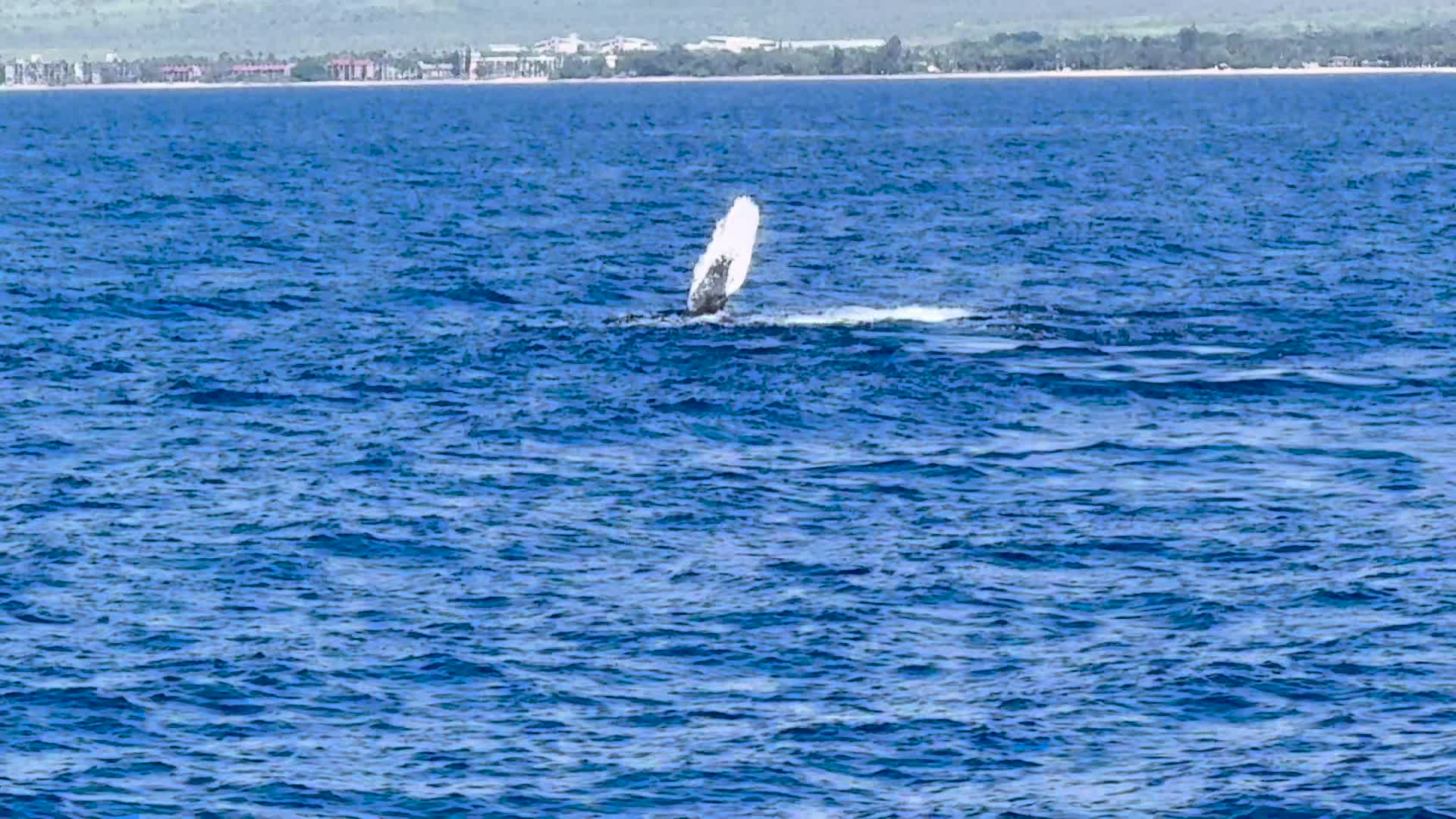
The full-body leap from the water. A 40-ton animal launching itself into the air and crashing back with an impact you can hear. When it happens close — and sometimes it does — it's genuinely jaw-dropping.
Fluke
As the whale dives, it lifts its tail flukes high out of the water. Each whale's fluke pattern is unique — like a fingerprint — and is how researchers identify individual animals.
Pec Slap
The whale rolls to its side and slaps its enormous pectoral fin on the water's surface. A humpback's pectoral fin can be 15 feet long. The slap sound carries far across open water.
Andrew's tip
"Watch the whole horizon, not just one spot. In peak season, there are often multiple pods visible simultaneously. Once you see a spout, count to 8–12 seconds — that's roughly how long between breaths. They'll come up again."
About the Whales
North Pacific humpback whales
45 ft
Average Length
As long as a school bus. Females are larger than males.
40 tons
Average Weight
About the weight of 5–6 adult elephants.
3,000 mi
Migration Distance
From Alaskan feeding grounds to Hawaiian waters each winter.
10,000
Whales in Hawaiian Waters
Estimated peak winter population across the Hawaiian Islands.
Federal Law
Whale watching regulations
Humpback whales in Hawaiian waters are protected under the Marine Mammal Protection Act and the Endangered Species Act. Federal regulations apply to all whale encounters:
100-yard rule
Vessels must stay at least 100 yards (300 feet) from all humpback whales. This is a hard federal limit — no exceptions.
No pursuit, no feeding
Vessels may not alter a whale's course, attempt to feed, or approach a whale that is showing signs of disturbance.
No swimming near whales or sea creatures
Entering the water within 100 yards of a humpback whale is a federal violation. The 100-yard rule is specific to humpbacks — other species have their own rules and guidance: stay at least 50 yards from spinner dolphins, and NOAA recommends keeping about 10 feet from sea turtles. Never approach, touch, or chase marine life; if an animal comes toward you, stay still or back away slowly.
Report violations
Report violations or harassment to NOAA Fisheries Enforcement at 1-800-853-1964. Commercial tour operators are required to follow strict guidelines.
Plan Your Whale Season Stay
Visit November through April
P410 is perfectly situated on the Kihei coast, directly across from Kama'ole II beach — one of the best free shore-based whale watching locations in South Maui. Book your whale season stay.