Summit elevation
10,023 ft
Drive from P410
~1.5–2 hrs
Sunrise reservation
Required
Summit temp at dawn
30–50°F
Book sunrise permit
recreation.gov →Andrew's Take
We recommend this to every single guest. No exceptions.
We've been to the Haleakalā sunrise — and even knowing roughly what to expect, it stopped us in our tracks. There is nothing quite like standing at 10,000 feet, watching the shadow of the volcano stretch across the clouds below you as the sun rises above the Pacific.
Yes, you have to set your alarm for 3:00 AM. Yes, it's cold up there — bring your warmest clothes. Yes, you have to book in advance. Do it anyway. Every guest who does this comes back raving about it. Every guest who skips it wishes they hadn't.
Haleakalā isn't just a scenic viewpoint — it's a different world. Above the clouds, in the crater of a dormant volcano, on a remote island in the middle of the Pacific. There's nowhere else like it.
Andrew's rating
#1
Single best experience on Maui. Non-negotiable.
Good for
How to Do It Right
Step-by-step: the Haleakalā sunrise
01
Book your sunrise permit — weeks ahead
Sunrise entry to Haleakalā National Park requires an advance reservation from recreation.gov. Permits go on sale 60 days out and sell out fast — especially in summer and winter. Book immediately after you know your dates.
02
Set your alarm for 3:00 AM
Sunrise at the summit ranges from roughly 5:40 AM in June to about 7:00 AM in winter — check exact times when you reserve. The drive from Kihei takes 1.5–2 hours in the dark. Factor in time to park, find a good spot, and let your eyes adjust. 3 AM departure is right.
03
Dress for 35°F — bring real layers
This is the part most visitors underestimate. The summit is genuinely cold — often below freezing with wind chill at dawn. Bring your heaviest jacket, gloves if you have them, and warm socks. You can strip layers off as the sun rises.
04
Stay. Explore. Don't rush down.
After sunrise, the crater landscape is unlike anything you've seen. Walk the crater rim trail. See the silversword plants found nowhere else on Earth. Consider the Sliding Sands Trail into the crater. Give yourself at least 2 hours at the top.
The Experience
What you'll actually see
On a clear morning, you arrive in darkness at 10,000 feet. Stars above. A sea of clouds below. The air is thin and cold. A crowd gathers quietly, everyone facing east. Then the horizon begins to glow — first deep blue, then purple, then a slash of orange and red as the sun clears the horizon.
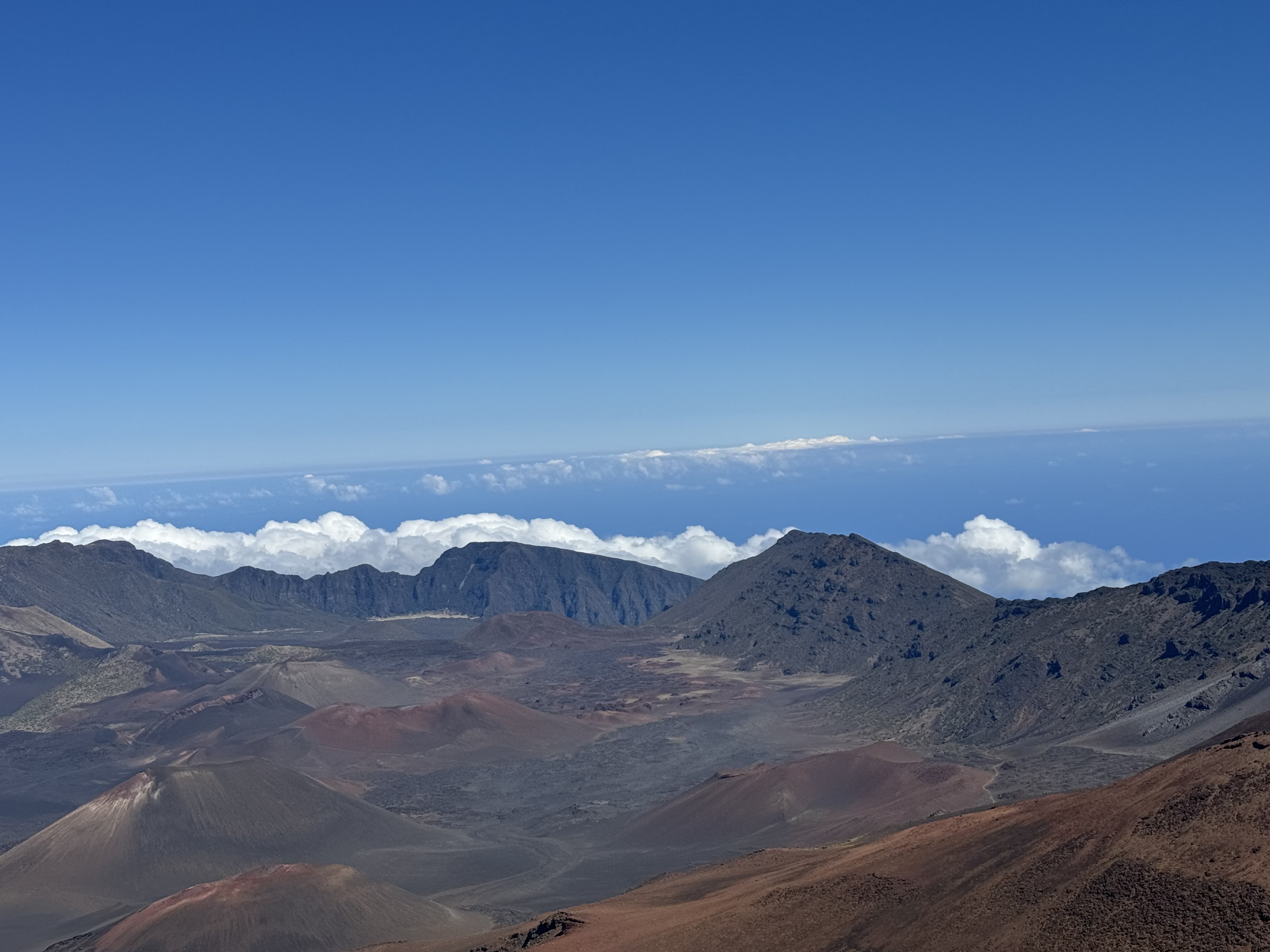
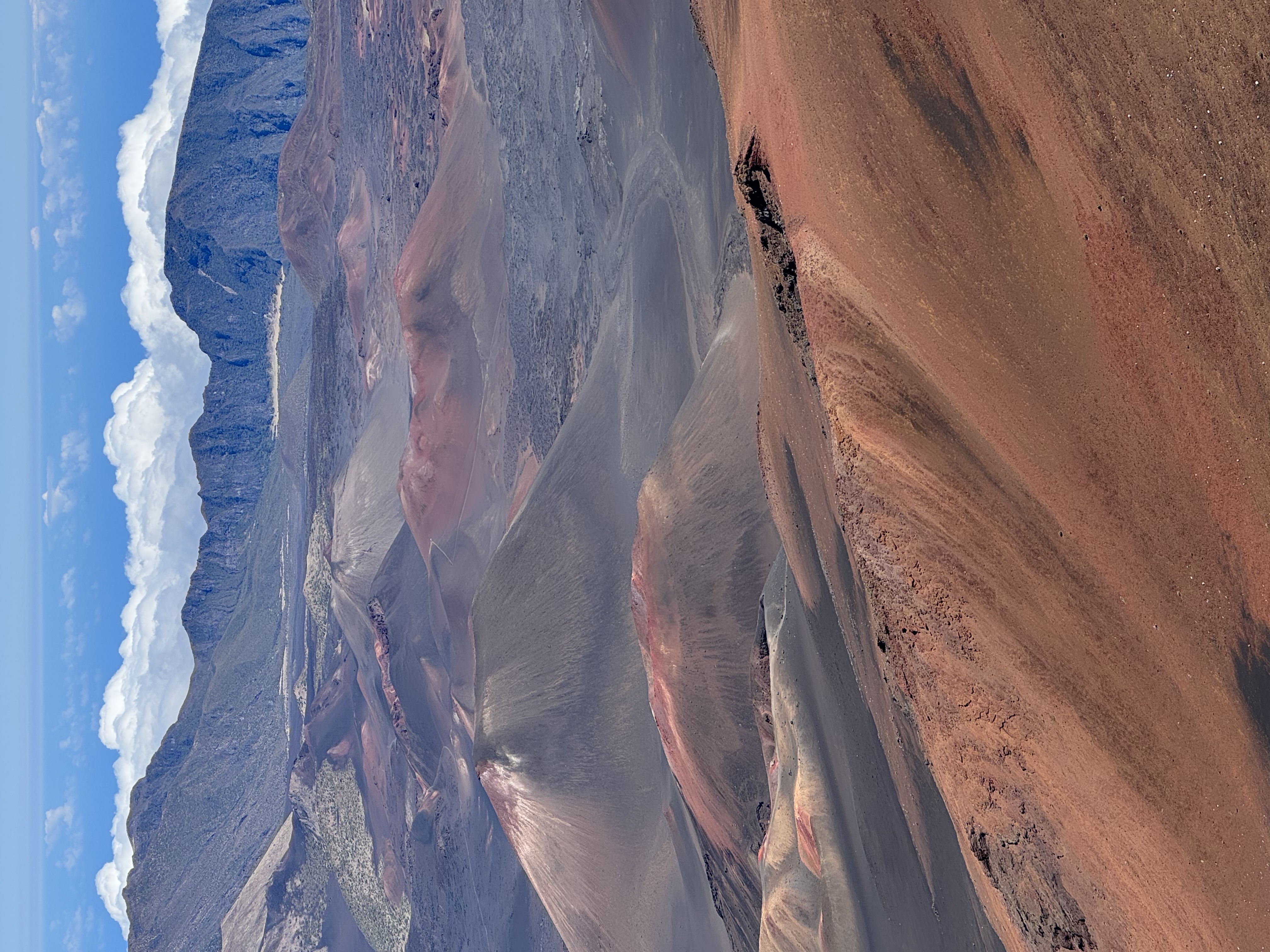
As daylight comes, you see the full scale of the crater: 7 miles long, 2 miles wide, 2,600 feet deep. Volcanic cinder cones dot the floor. The landscape looks more like Mars than Hawaii. It's disorienting in the best possible way.
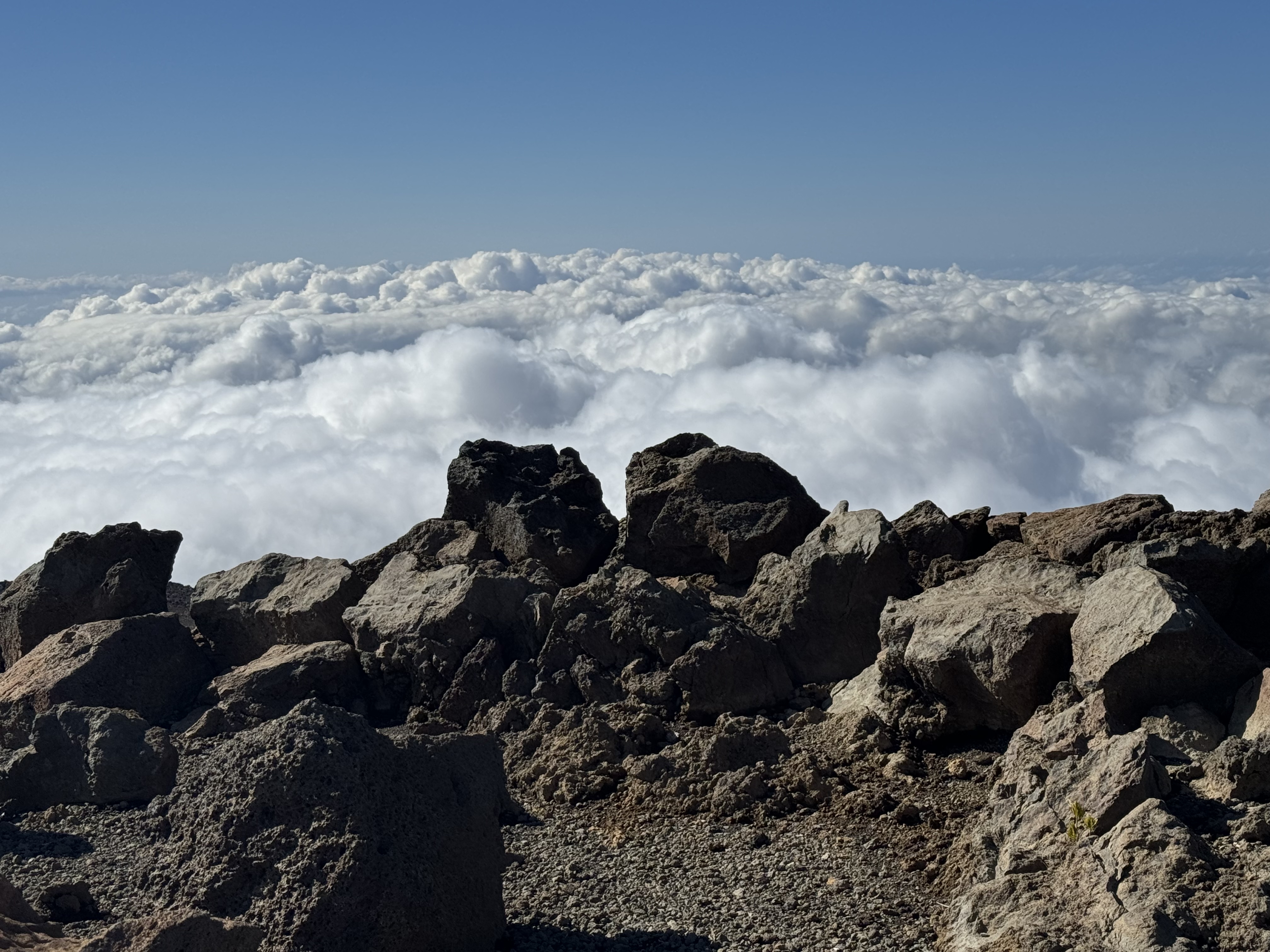
Below you, a carpet of clouds covers the island. Above you: pure blue sky and silence. It doesn't feel like Maui. It feels like the top of the world.
Weather caveat: Cloud cover occasionally obscures the sunrise. This happens maybe 20–30% of mornings. If it does, you still get an otherworldly crater experience — and a story about the time you were standing in a cloud at 10,000 feet. It's still worth doing.
There's More
Haleakalā beyond the sunrise
Sliding Sands Trail
The main crater trail descends into the volcanic landscape. Even walking a mile or two in gives you a completely different perspective. Note: what goes down must come back up at altitude — it's harder than it looks on the way back.
Silversword Plants
Found nowhere else on Earth, Haleakalā silverswords grow only in this crater. They live for up to 90 years and bloom exactly once before dying. Don't leave without seeing one — they're along the rim trail.
Bike the Descent
Several tour operators offer guided downhill bike rides — but not from the summit itself. Commercial bike tours have been banned inside the park since 2007, so rides start just outside the park boundary around 6,500 ft. You don't need to pedal much — just coast the long descent toward the coast. A popular way to experience the mountain for non-hikers.
Sunset at the Summit
No permit required for sunset visits — first come, first served. We've been to the Haleakalā summit several times for sunset and love it. The alpenglow on the crater walls is beautiful, and it's far less crowded than a sunrise visit.
Stargazing
Haleakalā sits above the cloud layer, with minimal light pollution. The night sky from the summit is among the clearest in the world — one reason major observatories operate here. An evening visit is unforgettable if skies are clear.
Hosmer Grove Trail
An easy 0.5-mile loop through a forest of non-native trees planted in the 1920s. Good for birding — the endangered nēnē goose is sometimes spotted here. Great for families who want a gentle hike with native bird sightings.
Practical Information
Everything you need to know
PERMITS & ENTRY
Sunrise entry (3 AM–7 AM) requires advance permit from recreation.gov — $1 per vehicle (reservation fee)
National Park entrance fee: $30/vehicle (valid for 3 days)
America the Beautiful pass accepted — excellent value if you visit multiple parks
After 7 AM, entry is first-come, first-served — no permit needed
WHAT TO BRING
Warmest jacket you have — gloves if available
Snacks and coffee in a thermos — nothing is sold at the summit
Flashlight or phone torch for parking and finding your spot
Sunscreen — UV at altitude is intense once sun rises
THE DRIVE
~38 miles · 1.5–2 hours from P410 to the summit visitor center
Steep, winding road — take it slowly, especially in the dark
On the way down, use low gear to avoid overheating your brakes
Most rental car agreements allow this road — confirm yours
Gas up in Kihei the night before — no gas stations on the mountain
ALTITUDE NOTE
At 10,000 feet, some people experience mild altitude effects: slight shortness of breath, dizziness, or headache. This is normal and passes quickly for most people. Drink water, move slowly, and sit if you feel lightheaded.
If you have heart or respiratory conditions, check with your doctor before visiting the summit.
Don't skip Haleakalā.
Book your sunrise permit at recreation.gov the moment you confirm your travel dates. They sell out — sometimes weeks in advance.